Stair Nosing: The Essential Safety Upgrade Every Commercial Building Needs
Understanding Stair Nosing and Why It's Non-Negotiable for NSW Builders
What Is Stair Nosing?
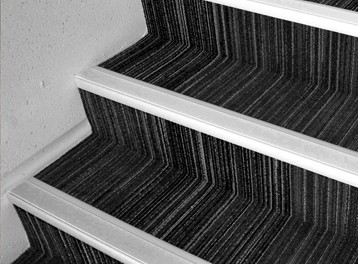
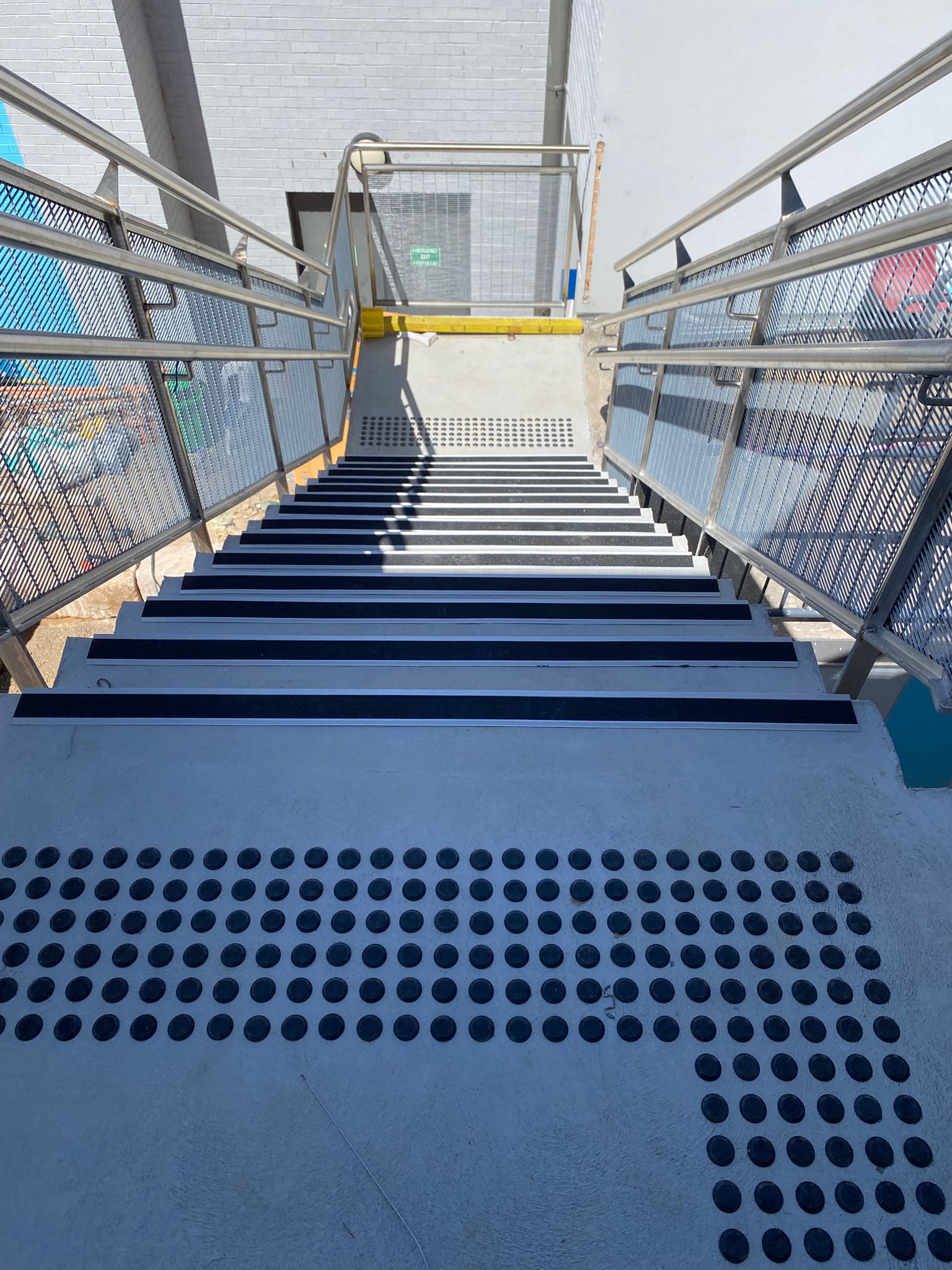
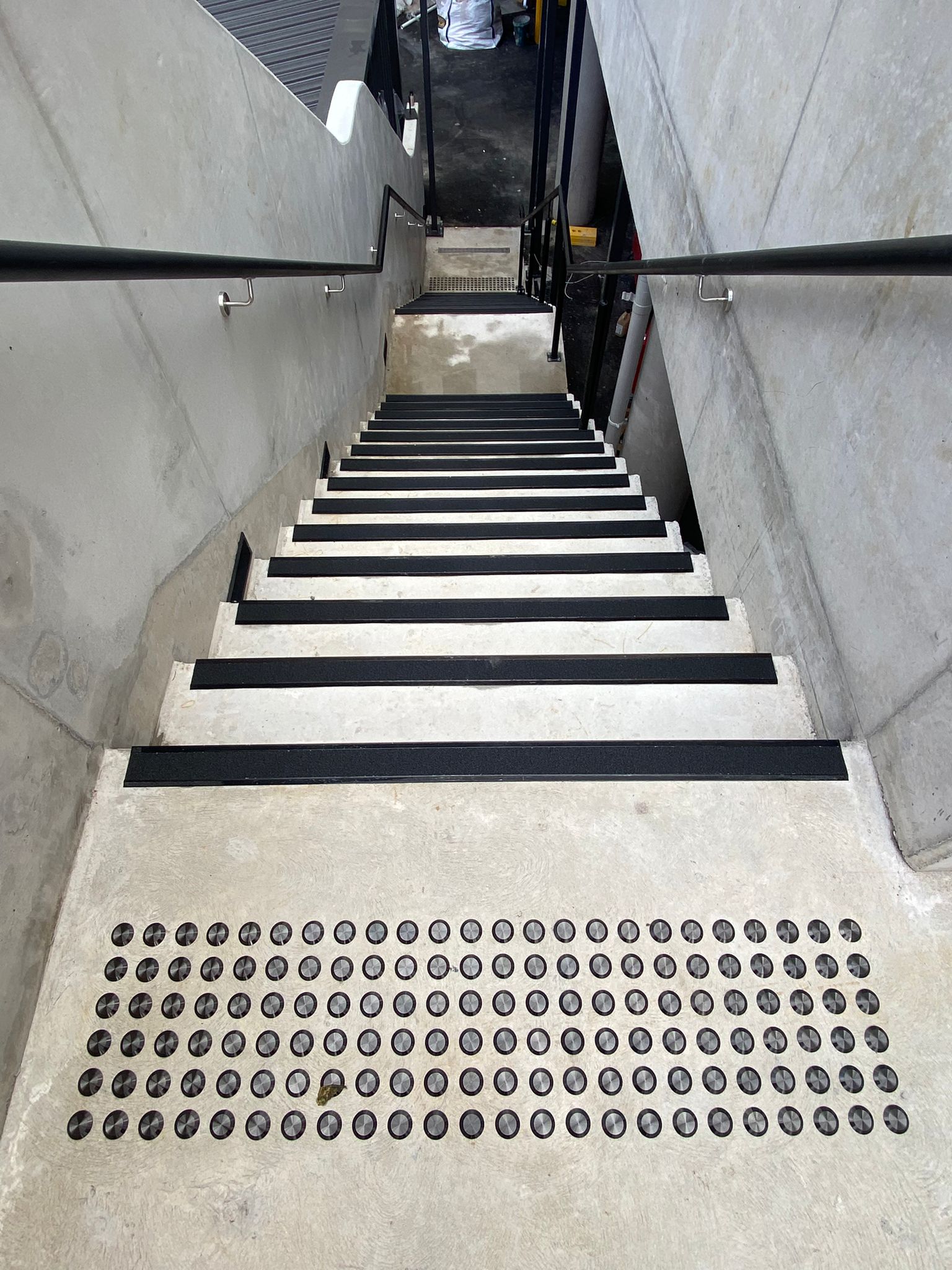
Stair nosing is the protective edge treatment applied to the front (leading edge) of each step on a staircase. These durable profiles enhance visibility, provide slip resistance, and protect the stair edge from wear and damage in high-traffic environments.
While often overlooked during initial project planning, compliant stair nosing is a mandatory requirement under the Building Code of Australia (BCA) and Australian Standards for commercial, public, and multi-residential buildings across NSW.
Why Stair Nosing Is Required
1. Slip Prevention
Stairs are one of the most common locations for slips, trips, and falls in commercial buildings. Anti-slip stair nosing provides crucial traction, particularly in areas exposed to moisture, dust, or heavy foot traffic.
2. Visual Contrast
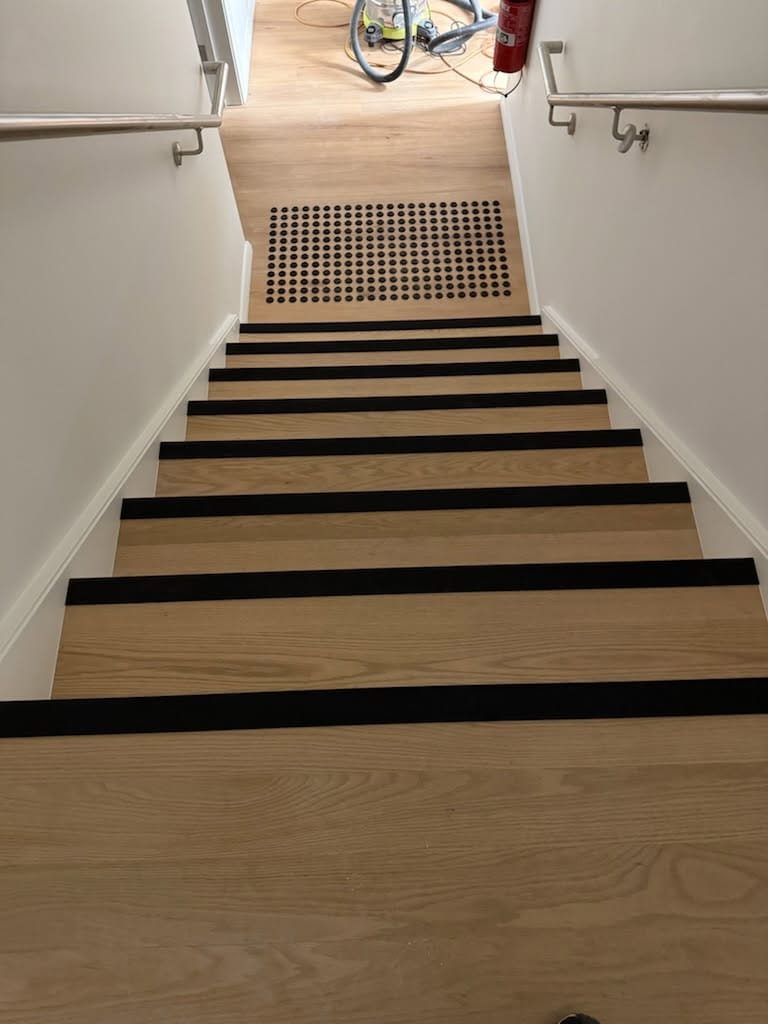
Compliant stair nosing creates clear visual distinction between steps, helping building users — particularly those with vision impairments — navigate stairs safely. The contrast between the nosing and the step surface is mandated under AS 1428.1.
3. Edge Protection
Stair edges experience constant impact and wear from foot traffic. Without protection, concrete, tile, and timber steps deteriorate rapidly, leading to trip hazards, costly repairs, and potential liability issues.
4. Compliance & Certification
Council approval and building certification require compliant stair nosing installations in accessible pathways and egress stairs. Non-compliant installations result in handover delays, rectification costs, and potential legal exposure.
Where Stair Nosing Is Required
Under Australian Standards, stair nosing must be installed on:
✓ Fire egress stairs in commercial and multi-residential buildings
✓ Public access stairways in retail, office, and hospitality venues
✓ Internal common area stairs in apartment buildings
✓ External stairs and ramps exposed to weather
✓ Industrial and warehouse access stairs
✓ Educational and healthcare facility stairways
Essentially, if your project involves stairs accessible to the public, staff, or residents — compliant stair nosing is mandatory.
Types of Stair Nosing Materials
Aluminium Stair Nosing
The most common choice for commercial applications. Lightweight, durable, corrosion-resistant, and available in a wide range of profiles, colours, and slip ratings. Ideal for concrete, tile, and timber stairs.
Best for: Office buildings, retail spaces, apartment common areas, educational facilities.
Brass Stair Nosing
Premium material offering superior durability and an upscale aesthetic. Naturally antimicrobial and highly resistant to corrosion. Often specified for heritage buildings, hotels, and luxury developments.
Best for: High-end commercial developments, heritage restorations, hospitality venues.
Rubber Stair Nosing
Flexible, high-traction solution ideal for carpeted stairs and areas requiring maximum slip resistance. Excellent sound dampening properties and comfortable underfoot.
Best for: Carpeted stairways, educational facilities, healthcare environments, aged care.
Stainless Steel Stair Nosing
Heavy-duty, corrosion-proof solution for extreme environments. Marine-grade stainless steel withstands coastal conditions, chemical exposure, and intensive traffic.
Best for: Coastal developments, industrial facilities, transport infrastructure, external stairs.
Key Compliance Requirements
AS 1428.1 – Design for Access and Mobility
Specifies requirements for luminance contrast, slip resistance, and nosing projection to ensure accessibility for all building users.
Building Code of Australia (BCA)
Mandates slip-resistant surfaces and visual contrast on stairs in commercial and public buildings.
Slip Resistance Standards
Stair nosing must meet minimum slip resistance values (typically R10-R13 depending on environment and exposure).
Common Stair Nosing Installation Mistakes
1. Incorrect Profile Selection
Choosing profiles that don't suit the substrate or traffic conditions leads to premature failure and potential safety hazards.
2. Poor Surface Preparation
Inadequate substrate preparation results in delamination, movement, and eventual failure of the nosing installation.
3. Insufficient Contrast
Failing to provide adequate luminance contrast between nosing and step surface creates accessibility compliance issues.
4. Wrong Adhesive or Fixings
Using inappropriate adhesives or mechanical fixings for the substrate and traffic conditions compromises installation longevity.
5. Inconsistent Installation
Variations in nosing projection, alignment, or finish across a stairway create trip hazards and fail compliance inspections.
Why Builders Choose Total Tactiles for Stair Nosing
Expert Material Selection
We assess your substrate, traffic levels, environmental conditions, and aesthetic requirements to specify the right nosing profile for lasting performance.
Professional Installation
Our certified installers deliver consistent, compliant installations across every step — meeting both AS 1428.1 requirements and architectural tolerances.
Custom Solutions
Need colour-matched profiles? Non-standard dimensions? Curved stairs? We provide custom solutions for challenging applications.
Fast Turnaround
We understand construction timelines. Our efficient installation process keeps your project on schedule without compromising quality.
Full Compliance Documentation
Every installation includes compliance certification and documentation for council approval and building certification.
Case Study: Kane Constructions – Huntley Street Recreation Centre
When Kane Constructions needed compliant stair nosing across multiple internal and external stairways at the Huntley Street Recreation Centre, they engaged Total Tactiles for material specification and installation.
Challenge: High-traffic public facility with both carpeted internal stairs and exposed external concrete stairs requiring different nosing solutions.
Solution: Aluminium profiles with high slip ratings for internal concrete stairs, rubber nosing for carpeted stairs, and heavy-duty stainless steel for external weather-exposed stairs.
Result: Fully compliant installation delivered on schedule, meeting council requirements and withstanding intensive public use since completion.
Stair Nosing FAQs
Q: Is stair nosing mandatory in NSW?
A: Yes, for commercial, public, and multi-residential buildings. The BCA and AS 1428.1 mandate compliant stair nosing on accessible pathways and egress stairs.
Q: Can I install stair nosing on existing stairs?
A: Absolutely. Retrofit stair nosing is one of the most common applications, particularly during refurbishments or when bringing older buildings up to current accessibility standards.
Q: How long does stair nosing last?
A: With proper installation, quality aluminium and stainless steel nosing can last 15-25+ years. Lifespan depends on traffic levels, environmental exposure, and maintenance.
Q: What's the difference between aluminium and brass stair nosing?
A: Brass offers superior durability and a premium aesthetic but costs more. Aluminium provides excellent performance at a lower price point and is suitable for most commercial applications.
Q: Do I need a specialist to install stair nosing?
A: Yes. Proper substrate preparation, adhesive selection, and installation technique are critical for compliance, safety, and longevity. DIY or inexperienced installations frequently fail.
Don't Risk Non-Compliance
Stair nosing isn't optional — it's a mandatory safety and accessibility requirement. Non-compliant installations result in:
❌ Council rejection and handover delays
❌ Expensive rectification work
❌ Potential public liability exposure
❌ Failed building certification
Get it right the first time with Total Tactiles.
Ready to Specify Stair Nosing for Your Project?
Total Tactiles supplies and installs compliant stair nosing across Sydney and greater NSW. From small retrofit jobs to large-scale commercial developments, we deliver professional installations that meet Australian Standards and your project timeline.
Call: 1800 595 180
Email: sales@totaltactiles.com.au
Quote: Request a Free Quote